The Battle of the Fork: Where Fitness Is Really Won

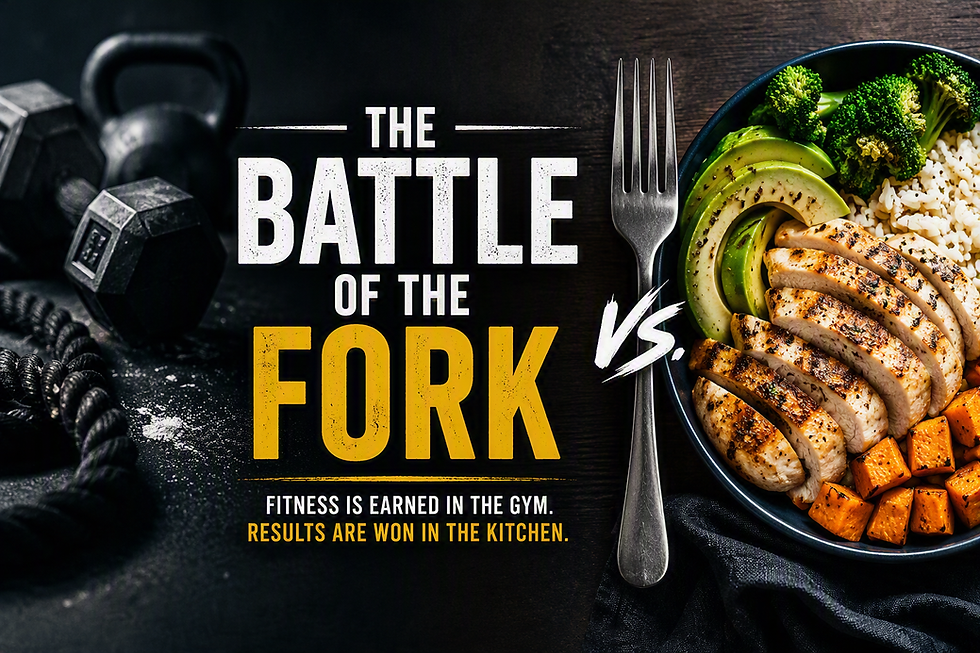
When most people hire a personal trainer, they believe success happens during their workouts. They think the sweat, the burpees, the heavy lifts, and the hours spent in the gym are what determine their results.
But the truth is, the real battle isn't fought in the gym.
It's fought with a fork.
The Reality of Time
Let's do some simple math.
Most clients see their trainer for 2-3 hours each week. There are 168 hours in a week.
That means your trainer influences roughly 1-2% of your week.
The other 98-99%? That's all you.
Your trainer can provide the roadmap, motivation, education, and accountability during those few hours. But once you leave the gym, you're responsible for every meal, snack, drink, and decision that follows.
That's why nutrition consistently outweighs exercise when it comes to body composition, weight loss, and overall health.
You can't out-train a poor diet.
Accountability Beyond the Gym
Many clients work incredibly hard during their training sessions. They push through difficult workouts and give maximum effort.
Then they go home and unknowingly erase much of that hard work through inconsistent eating habits.
The issue usually isn't a lack of effort. It's a lack of awareness.
A handful of snacks here. Extra servings there. Weekend indulgences. Liquid calories. Mindless eating while watching television.
These small choices accumulate quickly.
Accountability isn't about perfection. It's about consistency. The clients who achieve the best results are often not the ones who train the hardest. They're the ones who maintain healthy habits when nobody is watching.
Why Tracking Your Food Matters
One of the most powerful tools available to clients is food tracking.
Many people avoid it because they think it's tedious or restrictive. However, tracking isn't designed to control your life. It's designed to educate you.
Food tracking helps answer important questions:
Are you eating enough protein?
Are you consuming more calories than you realize?
Are you getting sufficient fruits and vegetables?
Are your portion sizes aligned with your goals?
Are weekend habits sabotaging weekday progress?
Research consistently shows that self-monitoring dietary intake improves adherence and weight-management outcomes.
You don't necessarily need to track forever, but tracking provides valuable awareness. Much like tracking your finances helps you manage your spending, tracking your food helps you manage your nutrition.
You can't improve what you don't measure.
Protein: The Foundation of Success
If there is one nutritional focus that delivers the greatest return on investment, it's protein.
Protein plays a critical role in:
Preserving muscle during weight loss
Building and repairing lean tissue
Supporting recovery from training
Increasing satiety and reducing hunger
Maintaining strength and performance
Many clients significantly underestimate how much protein they need.
A protein-rich breakfast, quality protein sources at every meal, and strategic supplementation when necessary can make a dramatic difference in body composition and recovery.
When clients prioritize protein, they often experience better appetite control, improved energy levels, and greater success staying consistent with their nutrition plan.
The Role of Supplementation
Supplements are exactly that: supplements.
They should never replace a balanced diet.
However, they can help fill nutritional gaps and support overall health and performance.
Common evidence-based supplements include:
Whey or plant-based protein powder for convenient protein intake
Creatine monohydrate to support strength, muscle performance, and training adaptations
Omega-3 fatty acids for overall health
Vitamin D when dietary intake or sun exposure is insufficient
Supplements won't solve poor eating habits, but they can enhance an already solid nutrition foundation.
Think of supplements as supporting players, not the star of the show.
What the New Dietary Guidelines Emphasize
Modern dietary recommendations continue to reinforce several core principles:
Focus on Nutrient-Dense Foods
Build meals around:
Lean proteins
Vegetables
Fruits
Whole grains
Legumes
Nuts and seeds
Limit Highly Processed Foods
Highly processed foods are often easy to overconsume because they combine high calories with low satiety.
Reduce Added Sugars
Minimizing added sugars helps support healthy body weight and metabolic health.
Choose Healthy Fats
Emphasize unsaturated fats from sources such as:
Fish
Avocados
Nuts
Seeds
Olive oil
Create Sustainable Eating Patterns
The best diet is not the most extreme one.
The best diet is the one you can follow consistently for months and years, not days and weeks.
Winning the Battle
Your trainer can coach you through every squat, push-up, and deadlift.
But they can't sit beside you at every breakfast, lunch, dinner, office lunch, family gathering, or late-night snack.
The battle for your health, performance, and physique is largely won outside the gym.
It's won through consistent food choices, honest tracking, adequate protein intake, smart supplementation, and daily accountability.
The weights build strength.
The workouts build fitness.
But the fork determines the outcome.
Choose wisely, and you'll win the battle that matters most.


Comments